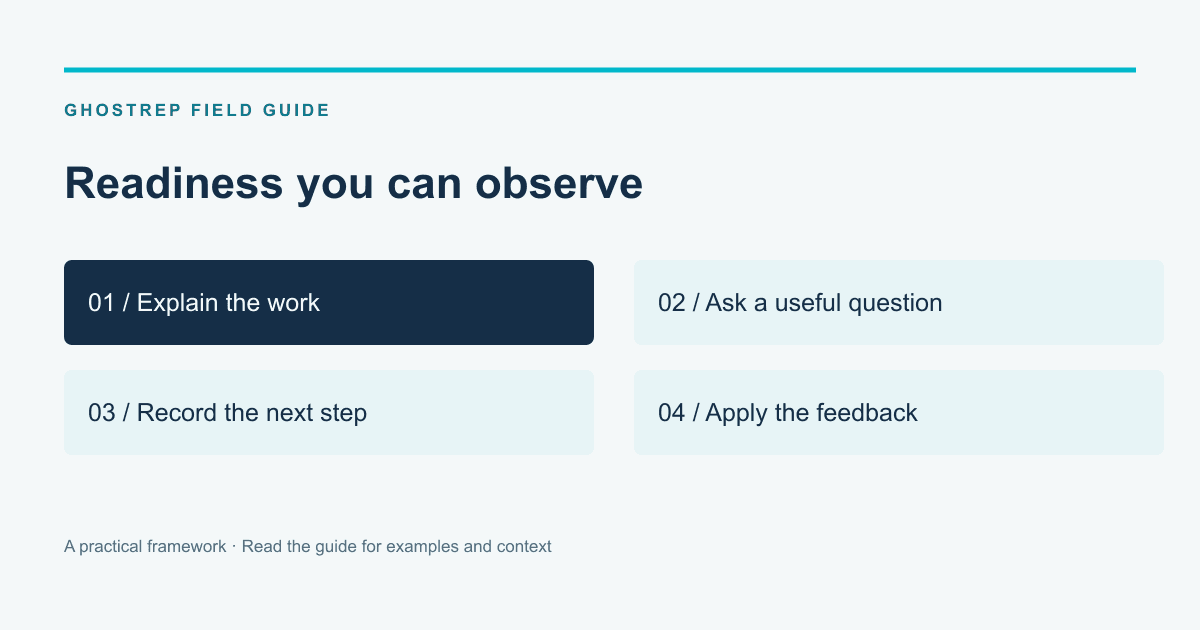
When a new rep struggles, review the preparation and support they received. Check whether the company defined readiness, provided practice, reviewed follow-up and gave the rep a way to ask for help. Those observations are more useful than a label about the person.
That is the practical answer. If a new rep cannot open a door conversation, explain why an inspection matters, handle the first two objections, write a clean CRM note, book the next step, and hand the job off without creating a production mess, they should not be burning paid leads yet.
Owner decision: Keep the rep in practice and starter opportunities until they can pass the live-lead checklist below. Move them to stronger leads only after their CRM notes, follow-up, objection handling, and inspection behavior are consistent for more than one good day.
A lot of roofing owners do the same thing with every new hire. The rep spends a few days in the office hearing about shingles, financing, supplementing, warranties, inspection photos, insurance language, and the CRM. Then they ride with a top rep for two or three appointments. The top rep does most of the talking. The new rep watches, nods, and says it makes sense.
Then Monday comes. The owner assigns a canvassing area, a few aged storm leads, or a paid appointment because "they need real reps." The homeowner says, "I already have a roofer," "just email me the estimate," or "my insurance said repairs only." The rep freezes, rambles about materials, promises to follow up, leaves a thin CRM note, and disappears for three days. By the time the manager notices, the lead is cold and the rep has decided roofing sales is chaos.
That is not a recruiting problem by itself. It is a readiness problem.
The first 90 days should answer one question: can this person run the basic roofing sales process without damaging leads, customers, or the team? Not whether they are charismatic. Not whether they looked good in the interview. Not whether they survived three ride-alongs. Can they execute the small behaviors that create trust and move jobs forward?
For a roofing company, those behaviors are concrete: qualify the lead source, set the inspection expectation, get enough roof and property context, explain the estimate clearly, handle "I need three quotes" without discounting immediately, schedule the follow-up before leaving, update the CRM the same day, and give production the details they need if the job sells.
If you want fewer first-90-day failures, stop treating training as information transfer. Treat it like a field-readiness system. Train the rep, test the rep, inspect the rep, then increase lead quality only after the rep proves they can protect the opportunity.
That is the difference between a real new roofing sales rep training system and an owner hoping the rep learns by taking damage in the field.
Why New Roofing Reps Fail
The failure usually starts before the rep ever knocks a door or walks into an appointment.
| Failure point | What it looks like in roofing | What to change |
|---|---|---|
| Live leads too early | A new rep gets paid leads before they can run a first appointment cleanly. | Use starter leads, mock appointments, and manager-reviewed practice before assigning high-intent leads. |
| Ride-alongs mistaken for training | The new rep watches your best closer instead of practicing the opener, inspection explanation, and close. | Give ride-alongs a scorecard and require the new rep to own specific parts of the call. |
| No objection practice | The rep hears "I need to talk to my spouse" and starts discounting or apologizing. | Practice the top objections until the rep can answer without sounding scripted. |
| No CRM inspection | Notes say "follow up later" with no next step, roof condition, objection, or decision maker. | Inspect notes weekly and make missing next steps a coaching issue, not an admin issue. |
| No readiness standard | The owner says "they seem ready" because the rep has been around for a week. | Define the behaviors required before each lead tier. |
Consider this illustrative example. A rep looks fine in the office because they can repeat the pitch. Their first three paid appointments tell a different story: one homeowner asks for three quotes, one wants the estimate emailed, and one says the adjuster only approved repairs. The rep leaves every appointment with no scheduled next step. The CRM says "sent estimate." The manager does not catch it until Friday. By then, the company has lost the lead quality, the rep has lost confidence, and the owner thinks the hire was bad.
Early Warning Signs in the First 90 Days
Do not wait until the rep quits to decide whether the ramp is working. These warning signs show up early:
- Vague CRM notes: "Follow up later" instead of decision maker, roof condition, objection, and next action.
- No scheduled next step: The rep leaves appointments hoping the homeowner calls back.
- Lead-source confusion: They treat a referral, a storm lead, and a cold door knock with the same opener.
- Objection avoidance: They stop calling homeowners who pushed back instead of practicing the objection.
- Estimate dumping: They send numbers without explaining scope, timeline, or why the work matters.
- Ride-along dependency: They perform only when a senior rep or manager carries the conversation.
Is This Rep Ready for Live Leads?
Do not answer this from gut feel. Use a checklist. If the rep cannot pass these items in practice, they are not ready for your best appointments.
- Lead source: Can they explain how the lead came in and adjust the opening for a door knock, referral, storm lead, aged lead, or paid appointment?
- First conversation: Can they create enough trust in the first minute for a homeowner to keep talking?
- Inspection setup: Can they explain what they are looking for, what photos they need, and what happens after the inspection?
- Safety and access: Do they understand your roof-access rules, when they are allowed to inspect, and when they need a manager or trained inspector?
- Estimate conversation: Can they explain scope, options, financing, timeline, and next steps without burying the homeowner in product trivia?
- Objections: Can they handle "I need three quotes," "I want to wait," "insurance said repair," and "just email it to me" without losing control? If not, use the roofing sales objections framework before paid leads.
- Follow-up: Can they book the next touch before leaving and execute it without a manager chasing them?
- CRM note: Can they document roof condition, decision makers, objection, next step, photos, and production risk clearly?
- Production handoff: If the job sells, can production understand what was promised?
This is also where safety belongs. If your rep will inspect roofs, they need real training on fall hazards and company rules before you put them in that situation. OSHA's roofing worker guidance is clear that workers exposed to fall hazards need fall-protection training from a competent person. Sales training does not replace that.
The First 30 Days vs. Days 31-90
The first 90 days should not be one long blur of "go sell." It needs phases.
First 30 Days: Build the Base
The first month is about proving habits before assigning valuable leads. The rep should learn your market, your lead sources, your inspection standard, your CRM rules, and your core talk tracks.
Do not bury them in every shingle spec and production exception on day one. Teach enough product knowledge to avoid bad promises, then spend most of the time on the moments that make or break early appointments: the opener, inspection explanation, objection handling, next-step scheduling, and notes.
A simple first-month structure:
- Week 1: Company basics, safety rules, lead sources, CRM basics, appointment flow, and daily role-play.
- Week 2: Ride-alongs with assigned parts of the appointment, not passive watching.
- Week 3: Starter leads or supervised field work with manager review the same day.
- Week 4: Readiness review before the rep receives better lead types.
If you need a full day-by-day version, keep that on the 30-day roofing sales onboarding plan. This page is about why reps fail and what ownership should inspect.
Days 31-90: Raise Lead Quality Only After Proof
Days 31-90 are where owners often lose discipline. A rep gets one good appointment, the manager gets busy, and suddenly the new hire is holding paid leads they are not ready to manage.
Use days 31-90 to tighten performance:
- Increase lead quality gradually: Move from practice and starter opportunities to stronger leads only after behavior is consistent.
- Review actual work: Inspect CRM notes, follow-up activity, call recordings if available, and appointment outcomes.
- Coach one bottleneck at a time: Do not tell the rep to improve everything. Pick the current constraint: opener, inspection, estimate, objection, follow-up, or handoff.
- Measure consistency: A new rep who has one good week and two sloppy weeks is not ready for more autonomy.
For the broader training timeline, send readers to how long it takes to train a roofing sales rep. Keep this article focused on the failure points inside the first 90 days.
What Managers Should Inspect Weekly
New reps do not fail only on the appointment. They fail in the gaps: weak notes, missed callbacks, no next step, no objection practice, bad handoff, and vague self-reporting.
This is why the manager has to measure onboarding by work output, not by whether the rep attended training. SHRM's onboarding measurement guidance points to time-to-productivity, retention, performance measures, surveys, satisfaction, engagement, and informal feedback. In roofing, translate that into weekly field behavior: lead handling, CRM quality, follow-up, practice, and appointment control.
Every week, the manager should inspect:
- Lead flow: Which lead sources did the rep work? Door knocks, referrals, aged storm leads, paid appointments, insurance follow-ups, or canvassing callbacks?
- Activity quality: Not just doors knocked or appointments run. Did the rep talk to the decision maker? Did they set the next step?
- CRM notes: Are notes specific enough for another person to take over the file?
- Follow-up speed: Did the rep follow up when they said they would?
- Objection pattern: What objection is stopping them most often?
- Inspection quality: Are photos, measurements, and damage notes usable?
- Estimate behavior: Are they explaining scope clearly or hiding behind price?
- Production risk: Are they promising timelines, colors, supplements, or upgrades that production cannot support?
- Practice volume: Did they practice the exact situation that beat them in the field?
This is manager work. A CRM can store notes, but it will not make a new rep competent. Your manager has to inspect behavior, coach the constraint, and decide when the rep earns better opportunities.
What to Practice Before Assigning Paid Leads
A paid lead should not be a training exercise. Before a new rep gets high-intent appointments, make them practice the situations that usually destroy early confidence.
Practice these before assigning your best leads:
- The first 60 seconds: Door opener, phone opener, and referral opener.
- The inspection explanation: Why the inspection matters, what the rep will document, and what the homeowner gets afterward.
- The estimate handoff: How to explain scope, options, financing, schedule, and next step.
- The common objections: "I need three quotes," "we are waiting," "insurance denied it," "send it to me," and "my spouse handles this."
- The follow-up call: What to say after the homeowner does not answer or says they are still thinking.
- The CRM note: Write the note from a real mock appointment and have the manager grade it.
- The production handoff: Explain the sold job to a production manager and see what questions are missing.
GhostRep Role Play is useful here because the rep can practice the same objection repeatedly before the company spends money on live lead flow. The tool does not replace a manager. It gives the manager more evidence about whether the rep is actually improving.
Why Ride-Alongs Alone Do Not Fix It
Ride-alongs can be valuable, but they are usually run too loosely.
If the new rep sits in the truck, watches your top salesperson handle the homeowner, and then hears "see how I did that?", you did not train them. You exposed them to a good rep. Those are different things.
A useful ride-along has a job:
- Before the appointment, the manager tells the new rep what to watch.
- During the appointment, the new rep owns a small part of the process when appropriate.
- After the appointment, the new rep writes the CRM note and explains the next step.
- The manager scores one or two behaviors, not the rep's whole personality.
By week two, a new rep should not only be observing. They should be practicing the opener, confirming the decision makers, explaining the inspection, or summarizing the next step. If they can only perform while someone else carries the appointment, they are not ready.
The Manager Accountability Problem
Owners often blame the rep because the rep is the one who quit. But a lot of early failure is really manager drift.
The manager gets busy. Existing reps need help. Production has a fire. A supplement is stuck. The new rep is told to "keep grinding" instead of being inspected. Two weeks later, the rep has weak notes, missed callbacks, three angry homeowners, and no confidence.
A new rep needs a weekly scorecard, not motivational check-ins.
| Weekly question | Pass standard |
|---|---|
| Did the rep work the assigned lead sources? | Activity matches the plan, not random busywork. |
| Did the rep document the work? | CRM notes include context, objection, next step, and follow-up date. |
| Did the rep practice the bottleneck? | Practice matches the real field problem from the week. |
| Did the rep improve one behavior? | The manager can name what changed and show evidence. |
| Is the rep ready for better leads? | Only if the prior lead tier is being handled cleanly. |
If the manager cannot answer those questions, the company is not managing the ramp. It is hoping the rep figures it out.
How to Fix the First 90 Days
The fix is not complicated, but it does require discipline.
- Define ready. Write down the behaviors required before live leads, paid leads, and unsupervised appointments.
- Separate watching from practice. Ride-alongs are exposure. Role-play and scored reps are practice.
- Protect high-intent leads. Do not use your best appointments to find out whether a rep can handle basic objections.
- Inspect CRM and follow-up weekly. Bad notes and missed follow-up are early warning signs.
- Coach the constraint. Pick the one behavior causing the most damage and drill it until it improves.
- Use tools where they reduce manager load. A structured sales onboarding plan, Role Play, and Training Studio can help standardize practice and review.
The goal is not to baby the rep. The goal is to stop burning leads while pretending the rep is being trained.
What This Should Not Become
This should not become a bloated 90-day binder nobody uses. It should not become generic sales training from another industry. It should not become a manager lecture where the rep listens for two hours and never practices.
Keep it tight. Every week should have field behavior, practice behavior, CRM behavior, and a manager decision. If the rep improves, raise the difficulty. If they do not, coach the bottleneck. If they still do not improve after clear coaching and fair lead exposure, move on before the damage gets bigger.
Bottom Line
New roofing reps fail in the first 90 days when the company confuses exposure with training and optimism with readiness.
If you want better ramp outcomes, define what ready means, practice the real conversations before assigning strong leads, inspect CRM and follow-up every week, and make managers accountable for coaching one bottleneck at a time.
For a working system, start with the sales onboarding plan tool, use GhostRep Role Play for objection practice, and use Training Studio to turn real field behavior into coaching material. If you want help building the workflow around your team, book a GhostRep demo.
Source Notes
This article is written from GhostRep's roofing sales training and onboarding work. External references are used only for supporting context: the U.S. Department of Labor describes on-the-job training as employer-provided training for essential job skills, SHRM's onboarding measurement guidance covers time-to-productivity, retention, performance measures, and feedback, and OSHA's roofing worker guidance covers fall-protection training responsibilities for workers exposed to fall hazards.
Frequently Asked Questions
Why do new roofing sales reps fail so fast?
Most fail because they are put into live selling before they can run the basic process. They may know product facts, but they cannot open the conversation, explain the inspection, handle objections, update the CRM, follow up, or hand the job to production cleanly.
When is a new roofing rep ready for live leads?
A new rep is ready for better leads when they can pass a readiness checklist: lead-source context, first conversation, inspection setup, estimate explanation, objection handling, follow-up, CRM note quality, and production handoff. Until then, use practice, starter leads, and supervised appointments.
Are ride-alongs enough to train new roofing reps?
No. Ride-alongs are useful exposure, but they are not enough by themselves. The rep needs scored practice, assigned parts of the appointment, manager feedback, and follow-up inspection after the ride-along.
What should a roofing sales manager inspect each week?
Inspect lead source, activity quality, CRM notes, follow-up speed, objection patterns, inspection quality, estimate behavior, production risk, and practice volume. Those items show whether the rep is developing or just staying busy.
What should new roofing reps practice before paid leads?
They should practice the first 60 seconds, the inspection explanation, estimate handoff, common objections, follow-up calls, CRM notes, and production handoff. Paid leads should test sales skill, not basic readiness.
How long should it take to ramp a new roofing sales rep?
Ramp time depends on market, lead type, role, manager capacity, and the rep's background. The important part is not a magic number. The company should use the first 30 days to build the base and days 31-90 to increase lead quality only after the rep proves consistent behavior.
How can GhostRep help new roofing reps ramp?
GhostRep helps by giving reps structured role-play, objection practice, onboarding workflows, and manager coaching material. It does not replace ownership or sales management. It helps managers see whether reps are practicing and where they need coaching before they burn better leads.
Before giving a new hire better opportunities, price the ramp with the roofing sales-rep break-even model. If the role begins in the field, choose a usable platform from the canvassing-app comparison and measure the program with the door-knocking ROI calculator.
Do not confuse bad demand with bad execution: inspect the website conversion path, compare shared-lead economics from Angi and HomeAdvisor, and use the GhostRep versus Siro breakdown when choosing how to coach the rep.
Free tools for sales managers
Turn this into a manager workflow
Use free management and operations tools to turn coaching ideas into repeatable systems for your reps and managers.
Management tools
Use 1-on-1 scripts, meeting agendas, forecast templates, and escalation tools.
Browse management tools →Operations tools
Build scorecards, SOPs, pipeline templates, and review workflows your team can run every week.
Browse operations tools →AI Sales Coach
Give reps coaching based on real performance data instead of waiting for the next ride-along.
See AI Sales Coach →About the Author
Tim Nussbeck
Founder & CEO of GhostRep
20+ years in roofing and home improvement sales—knocking doors, running teams, and building practical coaching systems. Built GhostRep to give every rep access to the coaching top teams get.
Manager next step
Turn this into a manager workflow your team can repeat
Use the management tools if you need a practical coaching or accountability system first. Book a walkthrough if you want GhostRep tied to rep performance and live coaching.
- ✓Best fit if coaching is inconsistent across reps and managers.
- ✓Useful for 1-on-1s, scorecards, and weekly operating rhythms.
- ✓Demo shows how AI Sales Coach turns performance data into specific guidance.
Start Here
Browse management tools
Open scorecards, coaching docs, forecast templates, and manager workflows.
Browse management toolsNeed it mapped to your team?
Talk through your current workflow, traffic mix, and where GhostRep fits before you change anything.
Book a 15-minute walkthroughYou Might Also Like
Use this roofing sales call review cadence to sample the right conversations, protect manager time, coach one behavior, and track weekly follow-through.
Read article →See seven useful AI sales manager workflows for roofers, what AI should never own, and a practical pilot and buyer checklist.
Read article →Use a 30-day roofing sales onboarding calendar with safety gates, field practice, role play, coaching evidence, and weekly manager decisions.
Read article →