Free roofing hiring tool
A 30-60-90 sales onboarding plan that gets a new rep to their first close
I've onboarded enough reps to know the truth nobody wants to hear: a new hire decides whether they're staying in the first two weeks — not the first quarter. This free 30-60-90 roofing sales onboarding plan generator builds the week-by-week ramp that wins those two weeks: setup, field practice, role-play, and a first close you actually schedule for, with a milestone and a manager job on every window.
Tell it the rep type, their experience, and whether you're running 30, 60, or 90 days — for a storm rep, a retail closer, a setter, or a new manager — and it hands you a plan you can give the rep on day one. It works for solar, HVAC, and the rest of home improvement too; the ramp is the same shape.
Created by Tim Nussbeck — founder of GhostRep, 20+ years in home improvement sales and operations.
2 weeks
how fast a new rep decides whether they’re staying or already leaving
First close
the single biggest retention lever in month one — build the plan toward it
30·60·90
three windows — ramp, build, prove — each with a milestone and a manager job
Enter your details
Free to use. The output is your starting plan — adjust the milestones and manager cadence to your team and your market before you hand it to a rep.
What the 30-60-90 windows actually are
“30-60-90” isn't a buzzword — it's three windows, each with one milestone that tells you whether the rep is on track and one job that's yours, not theirs. Get specific about all three and onboarding stops being a vibe and starts being a plan you can hold someone to. That structure matches how strong onboarding is supposed to work: SHRM describes onboarding as more than orientation, with role expectations, support, and ramp structure extending beyond day one.
Source: the SHRM onboarding process guide breaks onboarding into preboarding, orientation, foundation-building, and mentoring instead of a single first-day checklist.
Day 0–30
Ramp
Setup and fundamentals, then a supervised first close. Pitch, product, CRM, licensing — then in front of homeowners with you on the table.
Milestone: Runs the pitch alone and has signed at least one deal with you in the room.
Your job: Ride along, run a daily role-play, and be at the table for that first close.
Day 31–60
Build
Solo territory and consistency. They book and close without a babysitter and start a referral and follow-up habit instead of chasing only fresh leads.
Milestone: Closing on their own at a believable clip; activity numbers steady, not spiky.
Your job: Weekly one-on-one against the numbers — coach the pattern, not just the last deal.
Day 61–90
Prove
Full expectation as the draw winds down. They’re running like a member of the team, not a project — or you both find out it isn’t a fit.
Milestone: At or near a veteran’s baseline production with no hand-holding.
Your job: Hold the standard and make the call: keep, keep coaching, or cut clean.
The first close is the whole game
If you take one thing from this page, take this: build the plan so the rep has a real shot at signing their first deal by the end of week two. Not week six. I've watched the same movie a hundred times — a rep who closes early turns into a believer overnight, and a rep still waiting for their first one starts interviewing somewhere else by Friday. That first signature does more for retention than any speech, any comp plan, any culture deck.
That's also why the worst thing you can do is bury a new rep in videos for two weeks. Gallup pegs the cost of a disengaged employee at up to a third of their salary — and disengagement doesn't start in month six, it starts on day three when nobody's given them a reason to believe. Get them a win before the doubt sets in.
Week by week (the 30-day default)
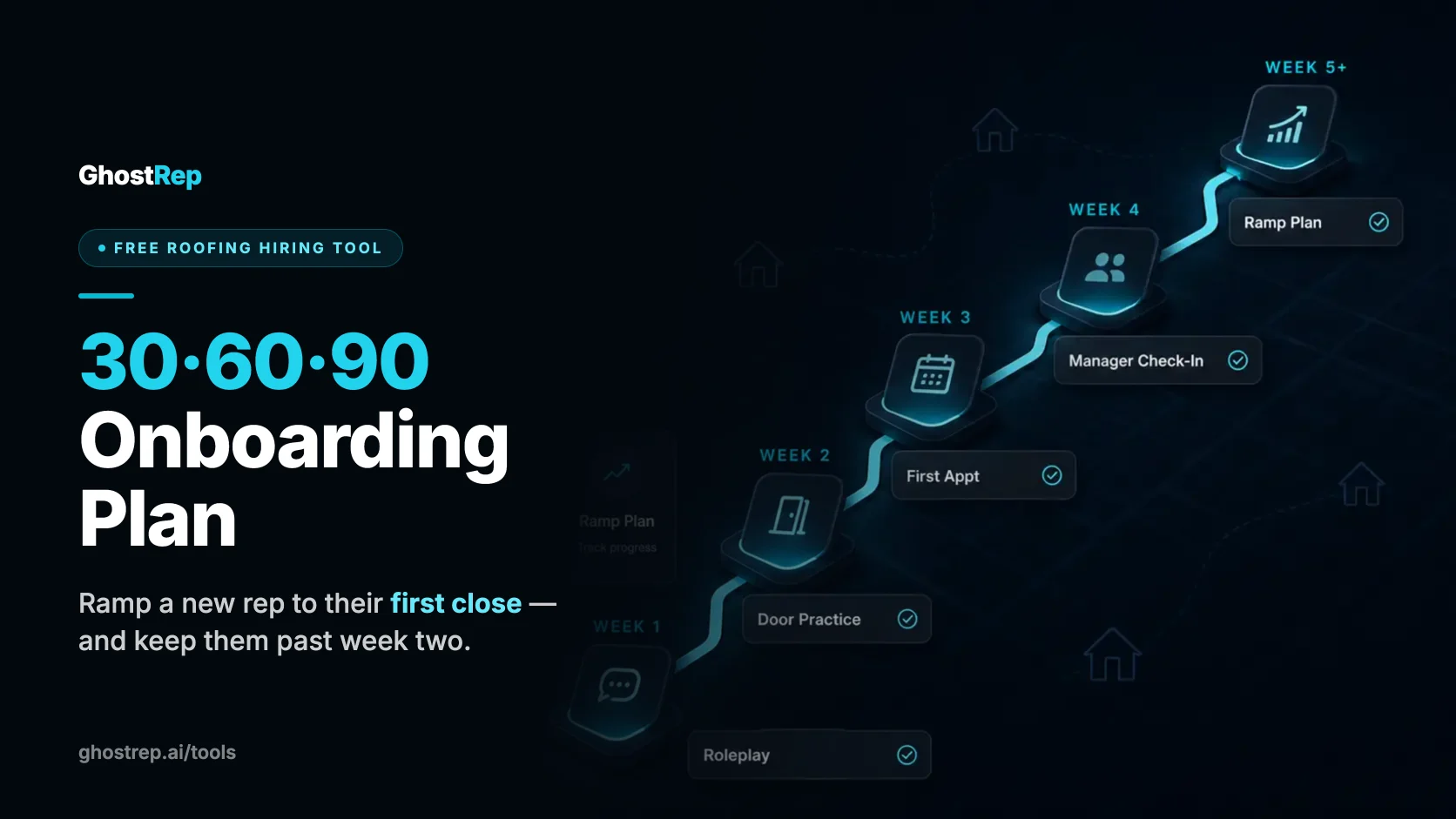
Here's the shape the generator builds for a new field rep on a 30-day ramp. The windows above are the map; this is the week-to-week you hand them on day one.
- 1
Orientation + shadow
Week 1Day 1 is setup — CRM, licensing, tools, territory, product basics. Days 2–5 they ride with your best rep and just watch. No live doors yet.
- 2
Guided field work
Week 2Their own canvassing zone with a manager check-in at noon every day. Goal: book their first three inspections on their own.
- 3
Supervised closes
Week 3You or a senior rep at the table for every presentation. Goal: the first signed contract — the close that decides whether they stay.
- 4
Independent
Week 4Solo territory, daily activity log in by 7pm. Goal: two closes. End-of-week review: continue, adjust territory, or extend.
The single best thing you can add to week one is reps — practice reps. GhostRep Role Play lets a new hire run 250+ appointment scenarios before they ever burn a real lead, so week two at a live door isn't their first rep.
Your job doesn't end at the hire
Self-directed onboarding fails. Every week of the plan names what you do, because the second manager involvement is “optional” it becomes “when I get to it,” and you never get to it. Whatever the week, your recurring jobs are the same four:
- Ride along. Be in the field with them early and often. You can’t coach what you didn’t see.
- Run the role-play. One live objection drill a day in week one beats a week of slides.
- Review the numbers. A weekly one-on-one against doors, appointments, and estimates — not a feelings check.
- Be at the first close. Sit at the table for deal one. It’s the highest-leverage hour you’ll spend all month.
Run the weekly one-on-one off the plan itself — the 1-on-1 script gives you the agenda so it stays coaching, not small talk.
How to spot a rep in trouble — before week five
You don't need a dashboard. Three numbers a week, starting day one, tell you everything — and which one is low tells you exactly what's wrong and what to do about it. If you want the manager version of that weekly view, use the sales KPI scorecard beside this onboarding plan.
Doors / calls are low
An activity problem. They’re hesitating to get in front of people — usually fear, sometimes a schedule excuse. Address it before it hardens into a habit.
Doors fine, appointments zero
A pitch problem at the door. They’re knocking but not converting. This one needs a ride-along and role-play, not encouragement.
Appointments fine, no estimates
They’re getting in but freezing on the presentation. Sit in on the next one and find the exact moment it falls apart.
The point is to look in week two, not week five. By week five a struggling rep has already half-decided to leave; in week two the same gap is a thirty-minute ride-along away from being fixed.
The mistakes that make new reps quit
Throwing them at live doors on day two
Skip the ramp and you bake in bad habits that cost you deals for months — and burn good leads while they learn on the fly.
Instead: Week 1 setup + role-play, week 2 shadow, week 3 supervised solo. Earn each step.
No 30-60-90 milestones
Vague expectations make vague reps. Nobody knows what on-track looks like, so nobody finds out it’s off-track until it’s too late.
Instead: Pitch alone by day 14, first close by day 21, baseline by day 60.
Onboarding = watching videos
Video training is where field reps go to quit out of boredom. It feels like progress and produces none.
Instead: Role-play, ride-alongs, live coaching. The reps you keep learned by doing.
Frequently asked questions
How long should sales rep onboarding take?
Thirty days is the realistic minimum for a field rep — long enough to learn your pitch, run first appointments, and close a deal or two with you in the room. Retail reps often need 60 because a referral pipeline takes longer to build than storm work. A new sales manager usually needs the full 90 to read the team and make a real call. The number that matters isn’t the calendar, though — it’s how fast you get them their first close.
What is a 30-60-90 onboarding plan?
It’s a ramp split into three windows with a milestone on each. Day 0–30 is ramp: setup, fundamentals, and the first supervised close. Day 31–60 is build: solo territory and consistency. Day 61–90 is prove: full expectation as the draw winds down. Each window names the focus, the milestone that says the rep is on track, and exactly what the manager does that month. It’s a plan, not a pep talk.
What is the biggest cause of new-rep turnover in the first 30 days?
Not making money fast enough. A rep who hasn’t closed in two or three weeks quietly decides the opportunity isn’t real and starts answering recruiter texts. The fix is never more classroom time — it’s getting them in front of homeowners sooner with you there to help on the first close. That first signed contract changes a rep’s whole psychology, and it’s the single biggest retention lever you have in month one.
Should I pay a new rep during onboarding?
If they’re commission-only, a draw for the first 30 days — usually $800–$1,500 a week — is both a recruiting edge and a smart investment. With zero income in the early weeks, money pressure makes a rep rush the pitch and over-promise at the table just to get a signature. A draw takes that pressure off and consistently produces better first-job behavior. Build the draw’s wind-down into the 60- and 90-day windows so the expectation is clear.
How do I know if a new rep is struggling before it’s too late?
Track three numbers every week from day one: doors knocked (or calls made), appointments set, and estimates presented. If any are low by week two, you have a diagnosable problem — an activity problem or a pitch problem — and both are fixable early. A rep who shows up every day but has zero appointments after ten days has a pitch issue that needs a ride-along, not a pep talk. Wait until week five to look and you’re trying to fix something that went terminal three weeks ago.
How is this different from a training script or an onboarding article?
A training script is what you say to teach the pitch; an article is the thinking behind onboarding. This tool builds the actual plan — the week-by-week schedule, the milestones, and the manager’s job for each window — that you hand the rep on day one. Use it as the backbone, then drop your training scripts into the weeks where they belong.